A home for a growing design community
I helped a five-person team turn student feedback into requirements and responsive prototypes for the UF UX design club’s first website.
My role
UX/UI design, user research & prototyping
Team & timeline
5 people · October 2023–April 2024
Work shown
Responsive prototypes & reusable design system
Give students a clear place to start
Gator User Design needed its first website: one place to learn about the club, find events and resources, and understand how to get involved. The design needed to serve students exploring UX as well as members looking for opportunities to develop their skills.
My contribution spanned user research, information architecture, wireframes, and prototypes. I worked alongside Jennifer Purington, Thomas Kaw, Ky’mani Brown, and project manager Natalie Sesodia.
Turn research into a site structure
We gathered feedback from 50+ survey respondents and reviewed other organization websites. Our comparison highlighted useful patterns—concise homepages, visible upcoming events, and student work—alongside issues such as repetitive content, long pages, and missing information.
I helped translate the research into site requirements and information architecture. Our team grouped ideas around events, resources, club information, and ways to connect. We also developed personas for a career-focused student, a design hobbyist, and a potential sponsor to consider their different goals.
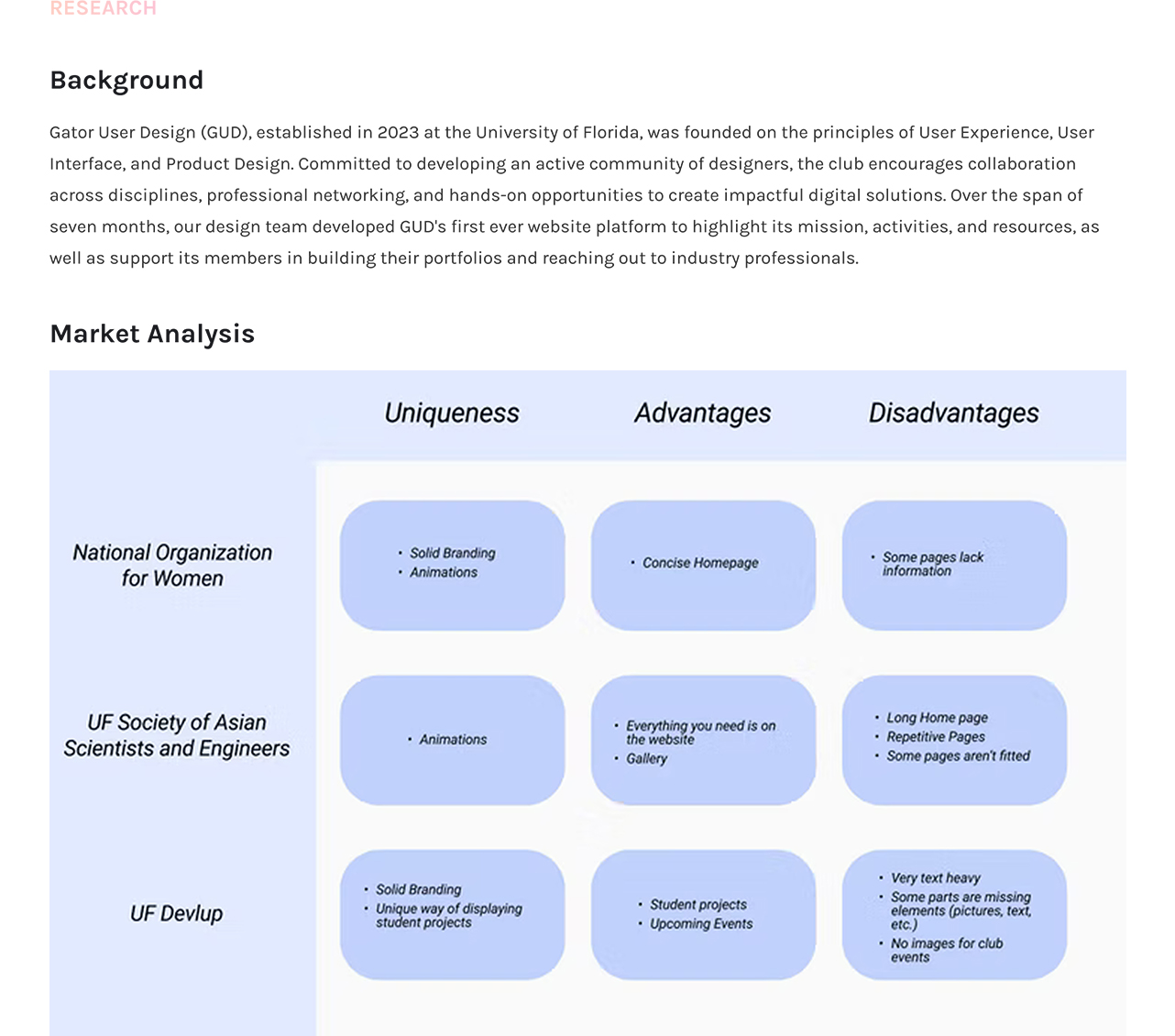
Original team research: a comparison of organization websites. Open the image to read it at full size.
View the affinity diagram and personas ↗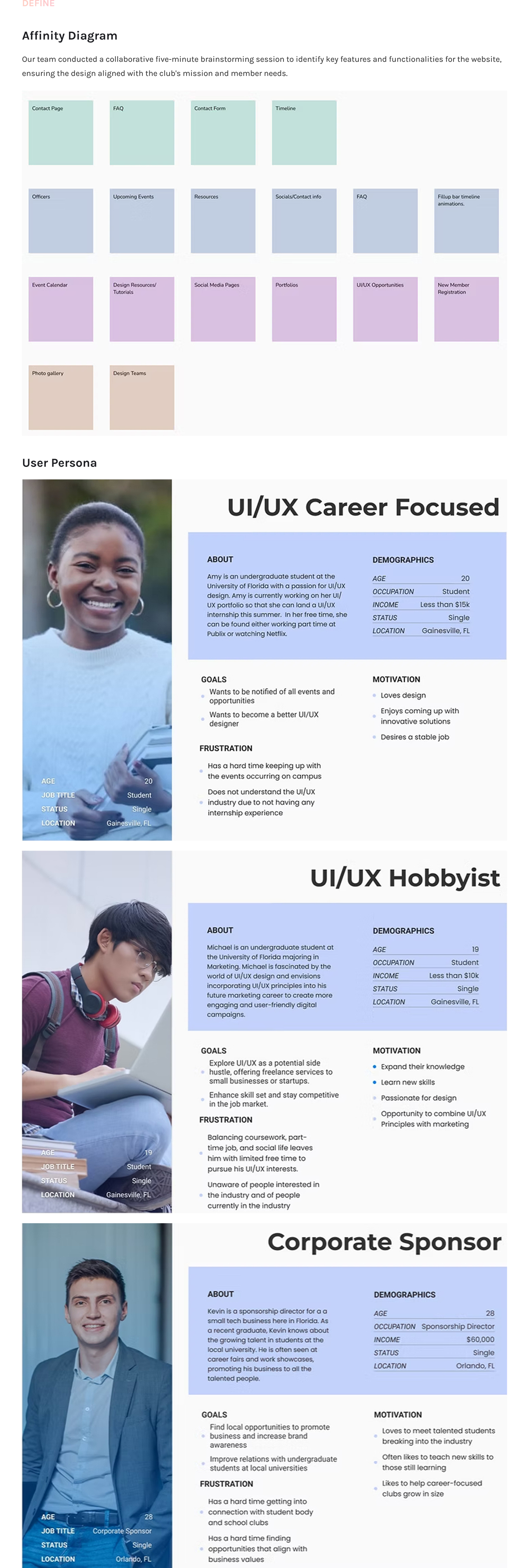
Build consistency across the team’s designs
I contributed to a reusable design system and 8+ page layouts, helping the team carry the same visual language across desktop and mobile. Shared colors, typography, navigation, cards, and form elements gave us a common foundation as we developed the prototypes.
The work moved from low-fidelity layouts into responsive prototypes covering the club’s information, events, resources, and design work.
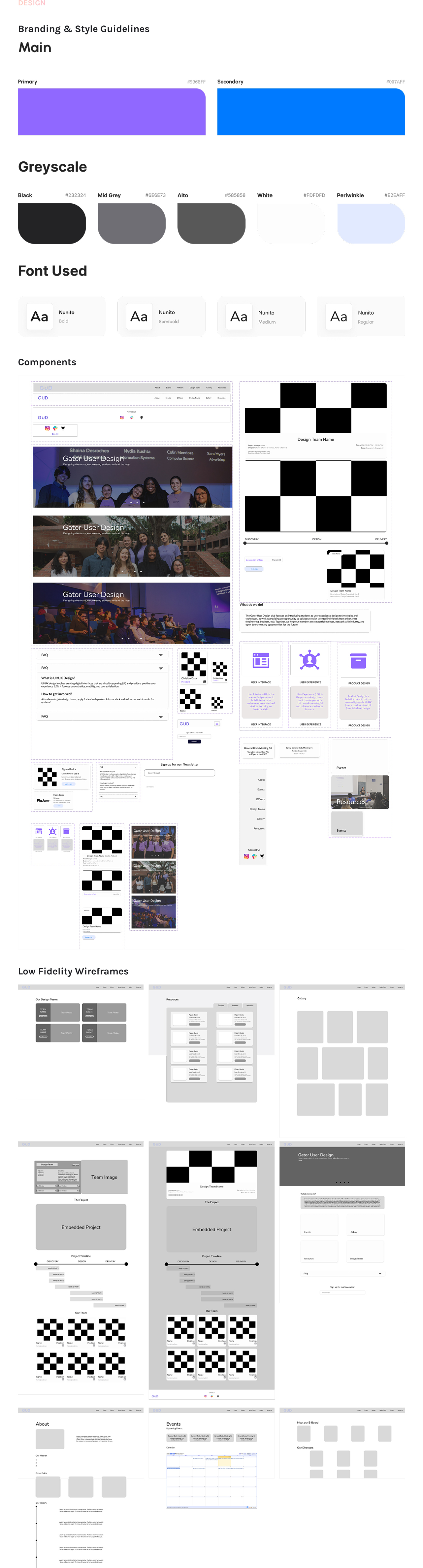
A preview of the shared style guide. Open the full sheet to see components and wireframes.
What we completed—and what still needed testing
The work shown here includes responsive prototypes, a shared design system, and the page layouts documented in the demo. At the time of the original project write-up, the website was awaiting public launch and usability testing had not yet been conducted.
This project gave me experience connecting research to a shared design direction and communicating ideas within a team. The next useful step would be task-based testing: can students find an upcoming event, locate a useful resource, and figure out how to join? That would help assess the design’s effectiveness beyond the prototype.
More product discovery work
Keeping stats at game speed →